
Your Garage Door Springs Are Doing More Work Than You Think
Every time you open or close your garage door, the springs are doing the heavy lifting — literally. A standard two-car garage door can weigh between 150 and 250 pounds, and the springs are responsible for counterbalancing all of that weight. Without them, your garage door opener alone couldn't move the door at all.
For homeowners in Castle Rock, understanding when to replace garage door springs isn't just about convenience — it's about safety. A spring that snaps unexpectedly can cause serious damage or injury. Knowing the warning signs and replacement timeline can save you from a stressful (and potentially dangerous) situation.
How Long Do Garage Door Springs Last?
Most standard garage door springs are rated for approximately 10,000 cycles. One cycle equals one full open and one full close. If you use your garage door four times a day (which is typical for a household that uses the garage as a primary entry point), that works out to roughly seven to nine years of use.
However, that lifespan can vary significantly depending on several factors:
- Quality of the springs: Budget springs may wear out faster, while high-cycle springs rated for 25,000 or even 50,000 cycles can last significantly longer.
- Maintenance: Springs that are regularly lubricated and inspected tend to last longer than neglected ones.
- Climate: Here in Castle Rock, the temperature swings between summer and winter put extra stress on metal components. Springs expand and contract with temperature changes, which can accelerate fatigue over time.
- Door weight and balance: A door that's out of balance forces the springs to work harder, shortening their lifespan.
Torsion Springs vs. Extension Springs
Before we go further, it helps to understand the two main types of garage door springs:
Torsion Springs
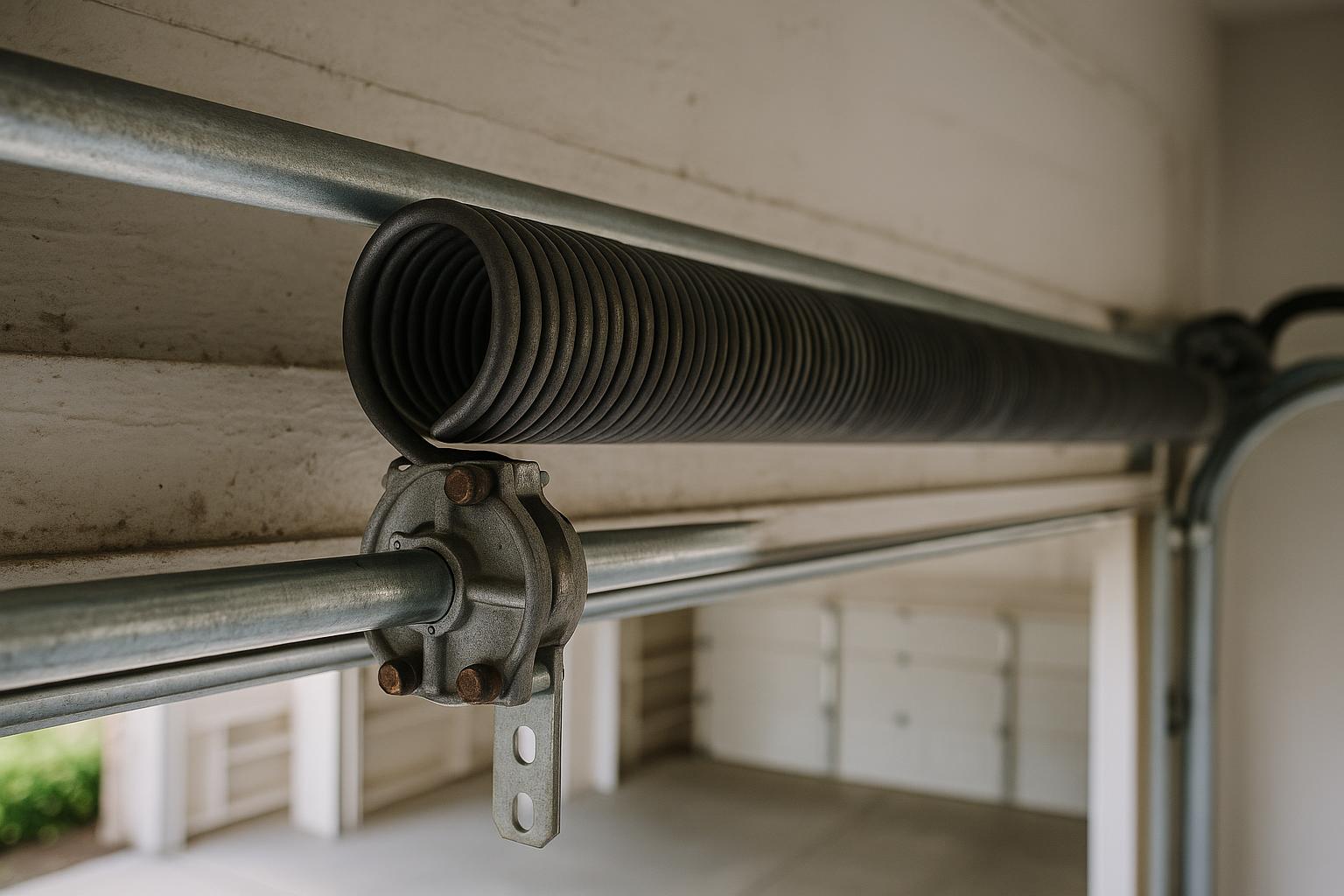
These are mounted on a metal shaft directly above the garage door opening. They use torque to lift the door and are the more common type found in modern garage door systems. Torsion springs tend to be more durable, offer smoother operation, and are generally considered safer because they're contained on the shaft even if they break.
Extension Springs
These run along the horizontal tracks on either side of the door. They stretch and contract to provide lifting force. Extension springs are more common in older installations and on lighter, single-car doors. When they break, they can fly off with considerable force, which is why safety cables should always be installed with them.
If your Castle Rock home has an older garage door system with extension springs, it may be worth considering an upgrade to torsion springs during your next replacement for improved safety and performance.
Warning Signs Your Springs Need Replacement
Springs rarely fail without giving some warning. Here are the most common signs that your garage door springs are nearing the end of their life:
- The door feels heavier than usual: If your garage door is difficult to lift manually or seems sluggish when the opener runs, the springs may be losing tension.
- Visible gaps in the spring coils: A torsion spring that's about to break will often show a visible gap or separation in its coils.
- The door doesn't stay open: If you disconnect the opener and the door won't stay open at the halfway point, the springs are no longer properly counterbalancing the door's weight.
- Loud bang from the garage: If you heard a loud sound like a firecracker coming from your garage, a spring may have already snapped. Many homeowners in Castle Rock have called us thinking someone broke into their garage, only to discover it was a broken spring.
- The door opens unevenly: If one side of the door rises faster than the other, one of your springs (or one side of a two-spring system) may be failing.
- Excessive vibration or jerky movement: Worn springs can cause the door to shake or move erratically during operation.
Can You Replace Garage Door Springs Yourself?
We understand the DIY spirit — it's part of what makes Colorado homeowners so resourceful. But garage door spring replacement is one job we strongly recommend leaving to professionals. Here's why:
- Extreme tension: Garage door springs are under tremendous force. A torsion spring that releases unexpectedly can cause severe injuries or even death.
- Specialized tools required: Proper spring replacement requires winding bars, clamps, and other tools that most homeowners don't have on hand.
- Precise calibration: Springs must be wound to the exact right tension for your specific door weight and size. Too little tension and the door won't open properly. Too much and you risk damaging the opener or the door itself.
- Warranty considerations: Many garage door and opener warranties are voided if repairs are performed by someone other than a qualified technician.
A professional spring replacement typically takes less than an hour and ensures everything is properly balanced, lubricated, and safe.
How to Extend the Life of Your Springs
While springs will eventually wear out no matter what, regular maintenance can help you get the most out of them:
- Lubricate your springs every few months with a silicone-based garage door lubricant. This reduces friction and helps prevent rust, which is especially important given the dry climate here along the Front Range.
- Schedule annual inspections. A trained technician can spot early signs of wear and catch problems before they become emergencies.
- Keep your door balanced. If you notice any signs of imbalance, have it addressed promptly so your springs aren't working harder than they need to.
- Consider high-cycle springs. If you're replacing springs, ask about upgraded options. High-cycle springs cost a bit more upfront but can last two to three times longer than standard springs.
When to Call a Professional in Castle Rock
If you've noticed any of the warning signs mentioned above — or if it's been more than seven years since your last spring replacement — it's a good idea to have your system inspected. A broken spring can leave your car trapped in the garage at the worst possible time, and attempting to operate a door with a broken spring can damage your opener or the door panels.
At Castle Rock Garage Door Specialists, we carry a wide selection of springs for all major garage door brands and can typically complete a replacement the same day. We serve homeowners throughout Castle Rock, Parker, Lone Tree, Highlands Ranch, Sedalia, and Franktown with honest pricing and reliable service.
Don't wait for a spring to snap. If something doesn't feel right with your garage door, give us a call and we'll take a look. A quick inspection today can prevent a major headache tomorrow.