
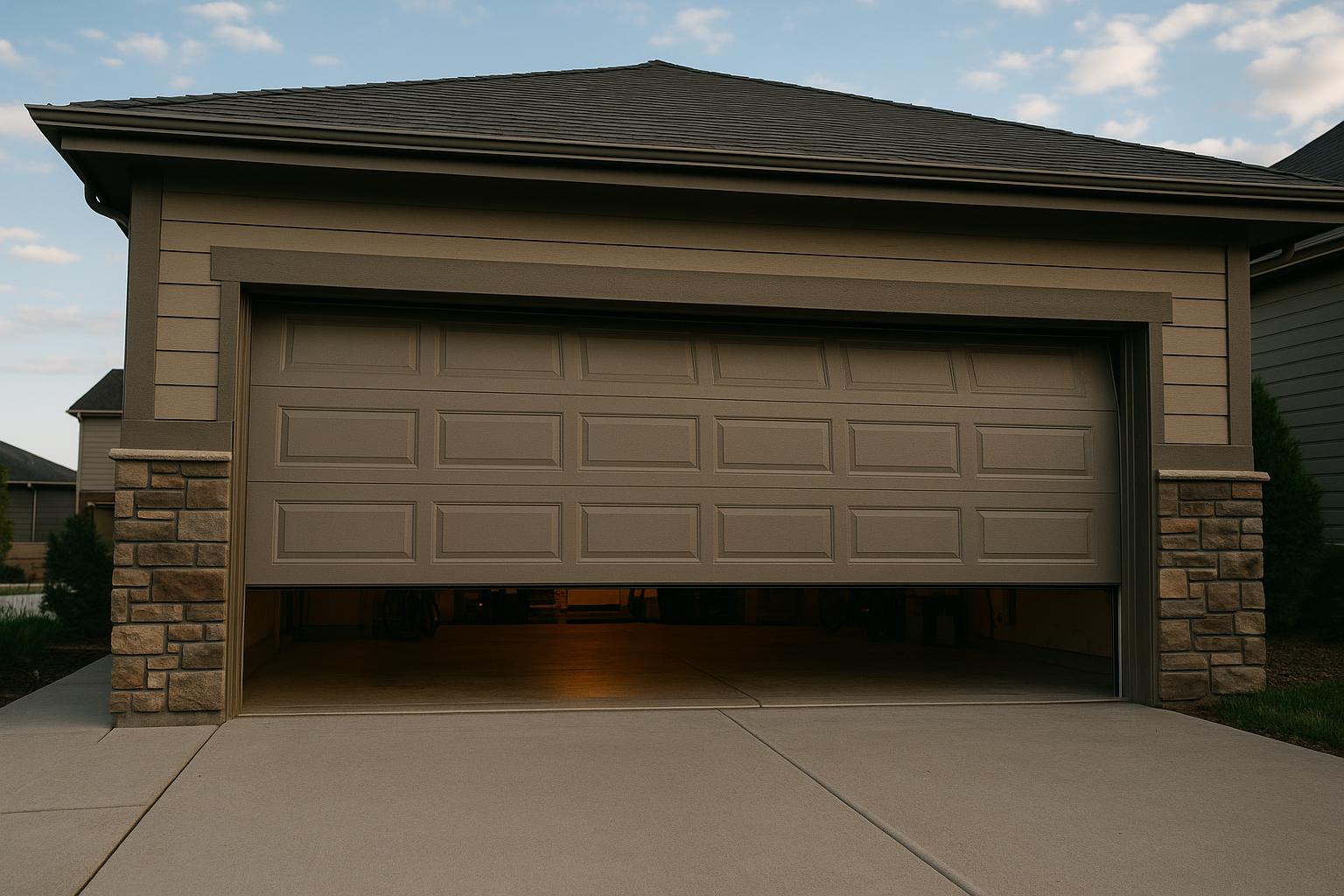
That Frustrating Moment When Your Garage Door Won't Stay Closed
You press the button on your remote, watch the garage door glide downward, and then — just inches from the floor — it stops, reverses, and goes right back up. You try again. Same thing. Maybe it worked fine yesterday, but today it's acting like the floor is made of lava.
This is one of the most common garage door complaints we hear from homeowners here in Castle Rock. The good news is that in most cases, the cause is straightforward and fixable. The bad news is that ignoring it can lead to bigger problems down the road, including security risks and energy loss — especially during our cold Colorado winters.
Let's walk through the most common reasons your garage door reverses before reaching the floor and what you can do about each one.
1. Misaligned or Dirty Safety Sensors
This is the number one cause of a garage door that reverses before closing. Every garage door opener manufactured after 1993 is required to have photo-eye safety sensors mounted near the bottom of the door tracks on each side. These sensors send an invisible beam across the opening. If anything breaks that beam — a bike, a trash can, a leaf, or even a cobweb — the door interprets it as an obstruction and reverses.
Here's what to check:
- Clean the sensor lenses. Dust, dirt, and spider webs are extremely common culprits, especially in Castle Rock where wind-blown dust and seasonal insects are a fact of life.
- Check alignment. Each sensor has a small LED light. If one is blinking instead of staying solid, the sensors are likely out of alignment. Gently adjust the sensor until both lights are steady.
- Look for obstructions. Make sure nothing is sitting in the path of the beam, even something small on the garage floor.
If cleaning and realigning doesn't solve the issue, the sensors themselves or their wiring may need to be replaced.
2. Incorrect Close-Limit Settings
Your garage door opener has limit settings that tell it how far the door should travel before it's considered fully open or fully closed. If the close-limit setting is off, the opener may think the door has hit something when it reaches the floor, triggering the auto-reverse safety feature.
This commonly happens after:
- A new opener installation
- A spring replacement that changes the door's balance
- Temperature fluctuations that cause metal tracks and components to expand or contract
Adjusting the limit settings typically involves turning a small screw or dial on the opener unit itself. Your owner's manual will have specific instructions for your model. If you're not comfortable making this adjustment, it's a quick fix for a professional technician.
3. Worn or Broken Garage Door Springs
Your garage door springs do the heavy lifting — literally. They counterbalance the weight of the door so the opener doesn't have to work as hard. When springs wear out or break, the door becomes significantly heavier. The opener struggles to control the descent, and the added resistance can trick it into thinking there's an obstruction.
Signs that your springs may be the problem include:
- The door feels unusually heavy when you try to lift it manually
- You hear loud creaking or grinding during operation
- The door closes unevenly or appears crooked
- You noticed a loud bang from the garage (a telltale sign of a spring breaking)
Important safety warning: Garage door springs are under extreme tension and can cause serious injury. Spring replacement should always be handled by a trained professional. This is not a DIY project.
4. Damaged or Obstructed Tracks
The metal tracks that guide your garage door need to be clean, properly aligned, and free of dents or bends. Even a small obstruction or a slight bend in the track can cause the door to bind or stick during its travel. When the opener encounters this resistance, it may reverse as a safety precaution.
Inspect your tracks visually for:
- Dents, bends, or warping
- Debris like small rocks, leaves, or ice buildup
- Loose mounting brackets that allow the track to shift
Minor debris can be cleared with a cloth, but bent tracks or loose hardware should be addressed by a professional to avoid making the problem worse.
5. Worn Rollers or Hinges
Over time, the rollers that travel inside your tracks and the hinges connecting your door panels can wear out. Worn rollers create friction and resistance. Damaged hinges can cause panels to bind against each other. Both issues increase the force required to move the door, which can trigger the opener's auto-reverse.
Nylon rollers typically last longer and operate more quietly than steel rollers, making them a popular upgrade for homeowners in neighborhoods throughout Castle Rock and Parker where noise can be a concern.
6. The Opener Force Setting Needs Adjustment
In addition to limit settings, most garage door openers have a force adjustment that controls how much resistance the motor will push through before reversing. If this setting is too low, the opener gives up too easily and reverses even under normal operating resistance.
However, be cautious about simply cranking up the force setting. If the door is reversing because of a legitimate mechanical issue — like a broken spring or damaged track — increasing the force can cause further damage to the opener or the door itself. It's best to rule out other causes first.
7. Weather-Related Issues
Castle Rock homeowners know that our weather can swing dramatically. Cold snaps cause metal components to contract, weatherstripping to stiffen, and even moisture to freeze along the bottom seal of the door, essentially gluing it to the garage floor. In summer, heat can cause expansion that throws off alignment.
If your door only reverses during certain weather conditions, check for:
- Ice or frost along the bottom seal
- A weatherstrip that has become stiff, cracked, or warped
- Track alignment shifts due to temperature changes in your garage
When to Call a Professional
Some of these fixes — cleaning sensors, clearing debris from tracks — are simple enough for any homeowner to handle. But if you've gone through the basics and your door is still reversing, or if the issue involves springs, tracks, or opener mechanics, it's time to call in a professional.
Continuing to operate a malfunctioning garage door can lead to more expensive repairs, damage to the door or opener, and potential safety hazards for your family.
At Castle Rock Garage Door Specialists, we diagnose and repair reversing garage doors every week. We serve homeowners throughout Castle Rock, Highlands Ranch, Lone Tree, Parker, Sedalia, and Franktown with same-day service when possible. Whether it's a simple sensor adjustment or a complete spring replacement, we'll identify the root cause and get your door working reliably again.
Don't Let a Reversing Door Become a Bigger Problem
A garage door that won't close is more than an inconvenience — it's a security vulnerability and an energy drain. Addressing the issue promptly saves you money, protects your home, and extends the life of your garage door system. If you've tried the troubleshooting steps above and your door is still giving you trouble, give us a call. We'll get it sorted out quickly so you can get back to your day.